
Thirty years. That’s how long a cargo ship can remain in service, and most of the fleet still runs on fossil fuels. Shipping accounts for about 3% of global greenhouse gas emissions, and without additional policy action, those emissions are projected to grow about 50% by 2050. Because ships built today will still be on the water in the 2050s, the rules set now will shape what they burn for decades.
The stakes reach well beyond emissions: affecting the air communities breathe, the energy security and economic resilience of nations, jobs and economic opportunities, and the health of our oceans. That’s why the International Maritime Organization’s (IMO) meetings in November and December matter. A year ago, member states voted 57 to 49 to adjourn for a year, after a Saudi-led motion and amid pressure from the United States. This left the Net-Zero Framework on the cutting room floor despite the fact that it carried 80% of the vote for approval in April 2025. Now the IMO is revisiting again, with a working group from November 23 to 27, a committee meeting from November 30 through December 3 and a session scheduled for December 4 to decide on adoption. In the meantime, some member countries, including Norway and Liberia, have floated alternatives as compromises and that could possibly weaken the framework.
What we are asking member states to adopt
- A binding global fuel standard. Ships must steadily cut the greenhouse gas intensity of the fuel they burn. This is what actually changes what comes out of the smokestacks.
- A pricing mechanism. Ships that miss the standard pay, with funds used to enable the maritime energy transition for the most vulnerable communities. Voluntary payments, as some have floated, won’t move an industry that runs on thin margins.
- Rewards for genuinely clean fuels. Revenue should go to zero and near-zero emission fuels, not to fuels that only look cleaner on paper.
- A fund that pays for a just transition. Money should flow to developing countries, small island states and port communities, so the countries least responsible don’t bear the cost.
- Honest emissions accounting. Fuels should be judged on their full lifecycle, from production to combustion, including methane leakage from LNG.
- Ensure robust lifecycle emissions accounting. Lifecycle emissions must include all methane emissions from LNG, to prevent fossil fuel lock-in and accelerate investment in genuinely zero-emission solutions. Binding fuel standards, predictable incentives and equitable access to the IMO Net-Zero Fund are essential to provide investment certainty and support a just maritime energy transition, particularly in developing countries across Asia.
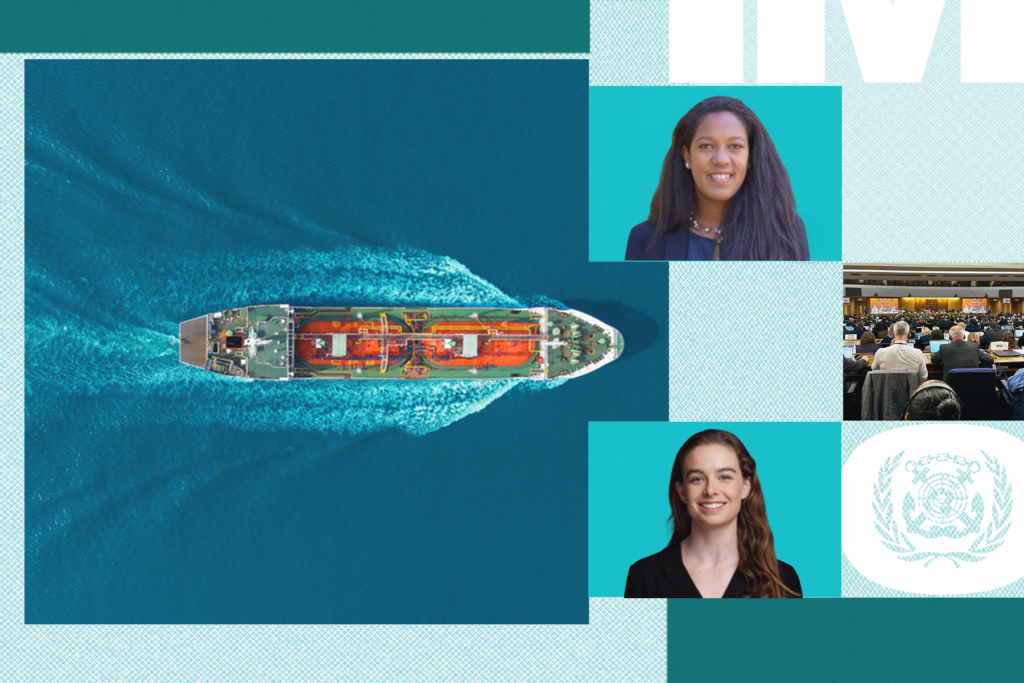
We are calling on member states to finish the deal, and to keep the Net-Zero Framework’s fuel standard and incentives intact so it genuinely changes what ships burn and who pays the cost. Recent fuel shocks have also shown the risk of depending on a few fossil fuel supply routes, and a strong framework would help ships diversify and provide energy security for the sector. To understand what’s at stake, what to watch at the IMO and why it matters for communities at the frontlines of pollution, Pacific Environment policy experts Davina Hurt and Jamie Yates break it down.
Q: What are the most important things to watch in these three meetings in November and December?
The first week is the Intersessional Working Group (ISWG-GHG 23) where member states work through the technical details. This includes unresolved questions in the Net-Zero Framework, including the economic mechanism, how the money from the fund would be managed and the level of emissions reduction. It would also include the development of what’s called the lifecycle greenhouse gas assessment, which is how fuel emissions are measured from production to use. We’ll be calling on member states and the IMO to set comprehensive guidelines that capture the full climate impacts and sustainability risks of marine fuels that might otherwise be overlooked.
The second week is the Marine Environment Protection Committee, or MEPC 85, followed by the resumed extraordinary session on December 4 to focus on adoption. We will be making sure that the Net-Zero Framework is not weakened by proposals from petrostates and the United States that oppose the transition from fossil fuels to a zero-emissions future for ocean-going ships.
Jamie Yates
All eyes will be watching ISWG, MEPC and the extraordinary sessions on Net-Zero Framework closely to determine whether these meetings deliver meaningful progress. This is where emissions standards and pollution rules are set that impact port and coastal communities around the globe. The two biggest questions are whether member states can muster the political will to move the global regulation forward with high ambition and whether the agreement retains its environmental integrity.
In April 2025, IMO member states made history by approving the draft Net-Zero Framework. But that momentum stalled in October, when opposition from petrostates, and the current United States administration delayed its adoption, jeopardizing years of international cooperation and hard-won progress. Diplomats reported facing U.S. threats of visa restrictions, port fees and sanctions to push countries to adjourn the vote. Caribbean and Pacific Island delegations were reportedly among those pressured, a particularly troubling use of economic leverage against smaller nations with close economic and security ties to the United States.
Pacific Environment will be on the ground to push back against these tactics and support member states that are serious about addressing climate change and port pollution. We want a deal that puts the costs where they belong: on polluters and on the fossil fuel companies that continue to earn billions in profits each year.
Davina Hurt

Q: Where is the opposition coming from?
The Net-Zero Framework and the potential for a meaningful climate regulation across global shipping presents a threat to petrostates and especially the LNG shipping industry. The LNG industry has for years presented themselves as a climate solution despite being a fossil fuel with significant potent methane leaks across pipelines and ships. We’ve seen an alliance coming from the Trump administration, Saudi Arabia and, recently, more vocal Greek shipowners who primarily operate LNG carriers. Their efforts to “kill” the Net-Zero Framework have been unsuccessful so far so they have put forward proposals focused on “market-driven” policies that purport to remove costs for consumers. In reality, costs for consumers will continue to rise with dependence on fossil fuels as we have all seen too well in recent months, while the cost of climate inaction will continue to build and wreak havoc across the globe.
Meanwhile, many in the shipping industry have been calling for the IMO to adopt climate action since the 2023 GHG Strategy was adopted. They recognize the reality of adopting zero-emission fuels and technology and the need for investment certainty from an IMO regulation. On this, environmental advocates such as Pacific Environment and leading industry voices are aligned — there must be a credible outcome from MEPC 85 to avoid worsening outcomes for the climate and for shipping itself.
In terms of proposals from Member States, we are seeing a number of different proposals, and they want different things. The first group, like the United States and Saudi Arabia, is strongly opposed to any price on emissions. The United States has put an emphasis on American fossil fuels, like LNG, and have been lobbying for its use in shipping while pushing back on the Net-Zero Framework. Other countries, like Norway and Liberia, are proposing compromises and softening the framework. Liberia’s plan might not address reducing emissions at all, whereas Norway is pondering making emissions payments voluntary.
Jamie Yates
Q: What does a credible outcome need to deliver at MEPC 85?
The points set out above remain the bare minimum we would hope to see Member States agreeing to at MEPC 85. Despite the pushback and delay from certain corners of the world, all Member States remain committed to the IMO’s GHG Strategy revised and adopted in July 2023. That called on countries and the international shipping sector to aim for net-zero emissions “by or around” 2050 with 80% reduction in GHG emissions by 2040 and a 40% reduction by 2030 (only three years away now with shipping emissions still increasing). Even those goals in the Strategy fall short of meeting the Paris Agreement’s 1.5C limit across all global sectors and countries.
We need to see the basic architecture of a global fuel standard with binding and science-based targets integrated with a pricing mechanism that can meaningfully direct financial support to support a just maritime energy transition, specifically with resources for climate-vulnerable and developing countries.
Jamie Yates
Q: What are the impacts if the Net-Zero Framework is weakened?
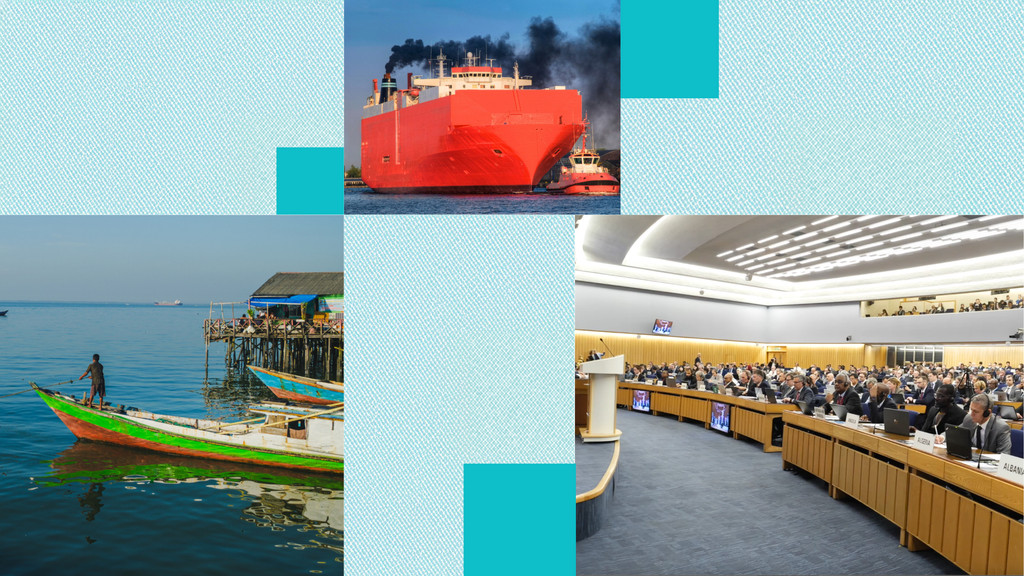
For communities near ports, this is personal. Ships burning dirty fuel means prolonged dependence and pollution where people live and work. These communities, disproportionately low-income communities and communities of color, have already carried the burden of shipping pollution for far too long.
But, it does not have to be this way. We recognize the legitimate and serious concerns that are being raised by governments about the costs of transitioning shipping for the Global South. Yet the costs of inaction are just as real, from the health impacts of continued pollution to the loss of jobs, livelihoods and economic opportunities. Weakening the Net-Zero Framework will not protect these communities; it risks prolonging the very harms they are already experiencing.
We are not only calling for a climate deal — we are asking for a deal that is equitable and finally puts the costs where they belong: polluters and the fossil fuel companies that continue to make billions of dollars in profits each year. Pacific Environment is here, along with local, state and federal advocates to push policies that get communities the accountability from regulators and governments that they deserve.
Davina Hurt
Planning for cleaner fuels isn’t only a climate decision. It’s also a hedge against price wings and supply disruptions that come with relying on only a handful of fossil fuel sources. It will leave shipping and countries that rely on imported fuel, more exposed to price fluctuations. A strong framework will lead to more choices in the fuel supply.
Jamie Yates
Want to learn more about our IMO work? Explore our dedicated IMO Hub, where you can find everything from policy updates and technical resources to insights from our global team and the latest developments in sustainable shipping. Plus, consider following us on social media and supporting our work.


