In late September, our team joined nearly 20 meetings and gatherings at Climate Week NYC 2026, connecting other environmental nonprofits, existing and new partners, industry leaders, policymakers and community advocates to advance climate solutions and strengthen protections for people and the planet (much like our mission). From port electrification and shipping emissions to black carbon pollution in the Arctic, our team connected local and global efforts, brought community needs into policy conversations and explored solutions to some of our most urgent environmental challenges. Because whether the work happens at a port in New York City or on the international stage, progress depends on bringing people together to protect our shared future.
Bringing port electrification to the table
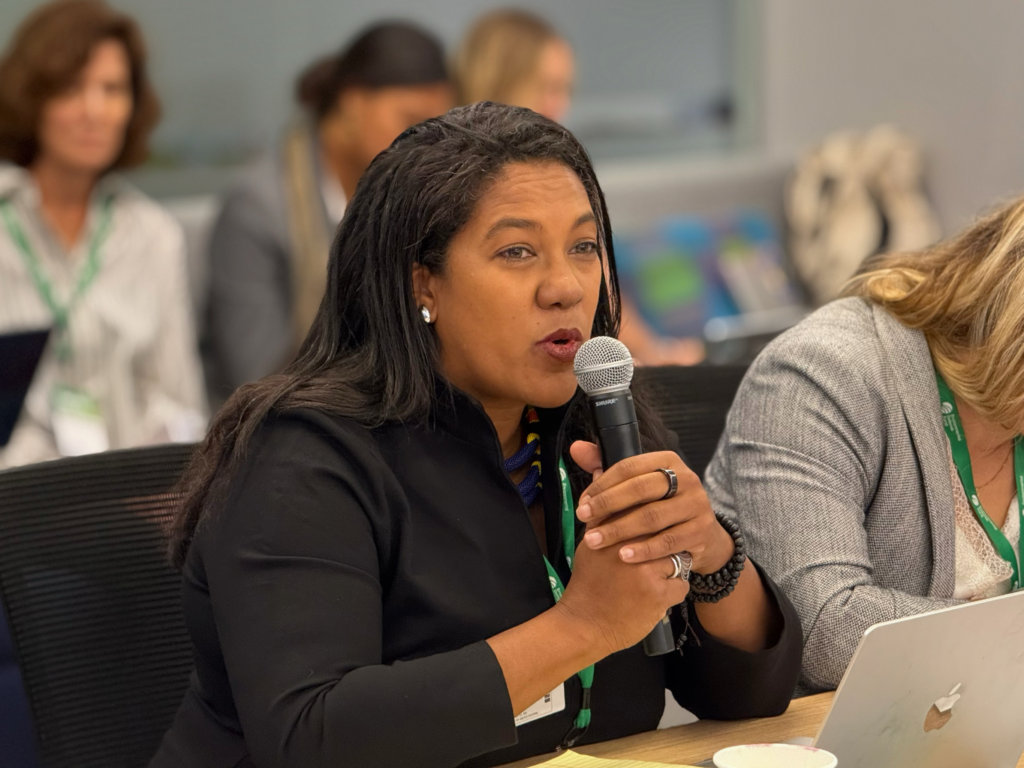
Pacific Environment and Environmental Defense Fund (EDF) co-hosted a roundtable on the challenges and opportunities in port electrification. The roundtable featured our very own Davina Hurt, climate policy director at Pacific Environment, who shared her own insight and perspective to the larger discussion about implementation and policy in environmental justice and frontline community needs, while connecting partners across the maritime sector.
Key takeaways included:
- Implementation requires technical expertise. Advancing solutions such as shore power requires practical guidance and collaboration with ports.
- Financing remains a challenge. Ports and private companies need clearer pathways to fund clean energy investments.
- Policy certainty matters. Regulatory uncertainty continues to complicate investment, even as industry partners look for ways to move forward.
The discussion also strengthened connections between East and West Coast ports and maritime industry partners, laying the groundwork for continued collaboration.
Advancing cleaner shipping from the Arctic to the global stage
Our team also joined conversations about cleaner shipping, marine fuels and the growing threat of pollution in the Arctic. Arctic Advocacy Manager Julia Hnilicka spoke at two Arctic-focused events, sharing findings from “On ever thinner ice,” our report on black carbon pollution and its impact on the Arctic. She also talked about how Pacific Environment works with Indigenous communities in Alaska and Canada to bring their experiences and concerns directly to the International Maritime Organization (IMO), the United Nations body responsible for regulating international shipping. This work has helped advance protections for the Arctic, including an IMO ban on heavy fuel oil in Arctic waters. It’s a reminder that international decisions are stronger when the people most affected by them have a seat at the table.
“It really has to be collaborative so that the work can keep moving beyond you … and it’s really about that ripple effect.”
Rethinking investment in cleaner maritime solutions
One theme that came up throughout the week was how difficult it can be to invest in cleaner shipping when policies are uncertain and funding is hard to secure. Liquefied natural gas, or LNG, is still widely viewed as a safer investment, while the development of alternatives such as e-fuels faces a slowdown amid limited policy support and investment. Pacific Environment experts, including Climate & Renewable Energy Manager Jamie Yates, joined conversations about how to keep the transition moving, make cleaner options more attractive to investors and reduce reliance on fossil fuels.
DID YOU KNOW?
LNG is still a fossil fuel. While burning it can produce less carbon dioxide than some conventional marine fuels, methane can escape during fuel production, transport and use on ships. Methane is a powerful greenhouse gas, meaning these emissions could outweigh LNG’s climate benefits.
Key takeaways included:
- Clear, consistent policies matter. Businesses need clearer rules and stronger signals from policy makers to commit funding to cleaner shipping solutions.
- We can make progress now. Improving energy efficiency, electrifying port operations and diversifying fuel options are practical steps the industry can continue taking despite policy uncertainty.
- Cleaner fuels need more support. Collaboration across industries and clearer standards could help build demand for sustainable fuels and move their development forward.
“We need to be serious in our attack against climate change. We need to ban together and come up with solutions that will benefit communities and to support innovation.”
Connecting policy, industry and community action
Climate Week was also a reminder that meaningful climate action takes all of us working together. Policy changes and new technologies matter, but so does listening to the people living with port pollution every day. In New York and New Jersey, that means bringing community groups, environmental advocates, labor and industry to the same table to find solutions that work for everyone. Throughout the week, we saw how building those connections can help turn conversations into action and move us closer to a cleaner, healthier future.
“Having a variety of perspectives, different kinds of thinking is just really critical to moving forward with pathways that really solve the issue for everyone.”
What’s next for Pacific Environment?
With key international shipping policy discussions coming up this fall, Pacific Environment will continue pushing for stronger climate protections and a cleaner future for the maritime shipping industry. The conversations at Climate Week NYC, from shipping emissions and cleaner fuels to investment and community needs, will help inform this work as we head into the IMO’s 23rd Intersessional Working Group on Greenhouse Gas Emissions from Ships (ISWG-GHG 23) and 85th Marine Environment Protection Committee session (MEPC 85) in late November and early December.
Stay tuned for updates as we follow these discussions and share what they mean for cleaner shipping, the climate and port communities.