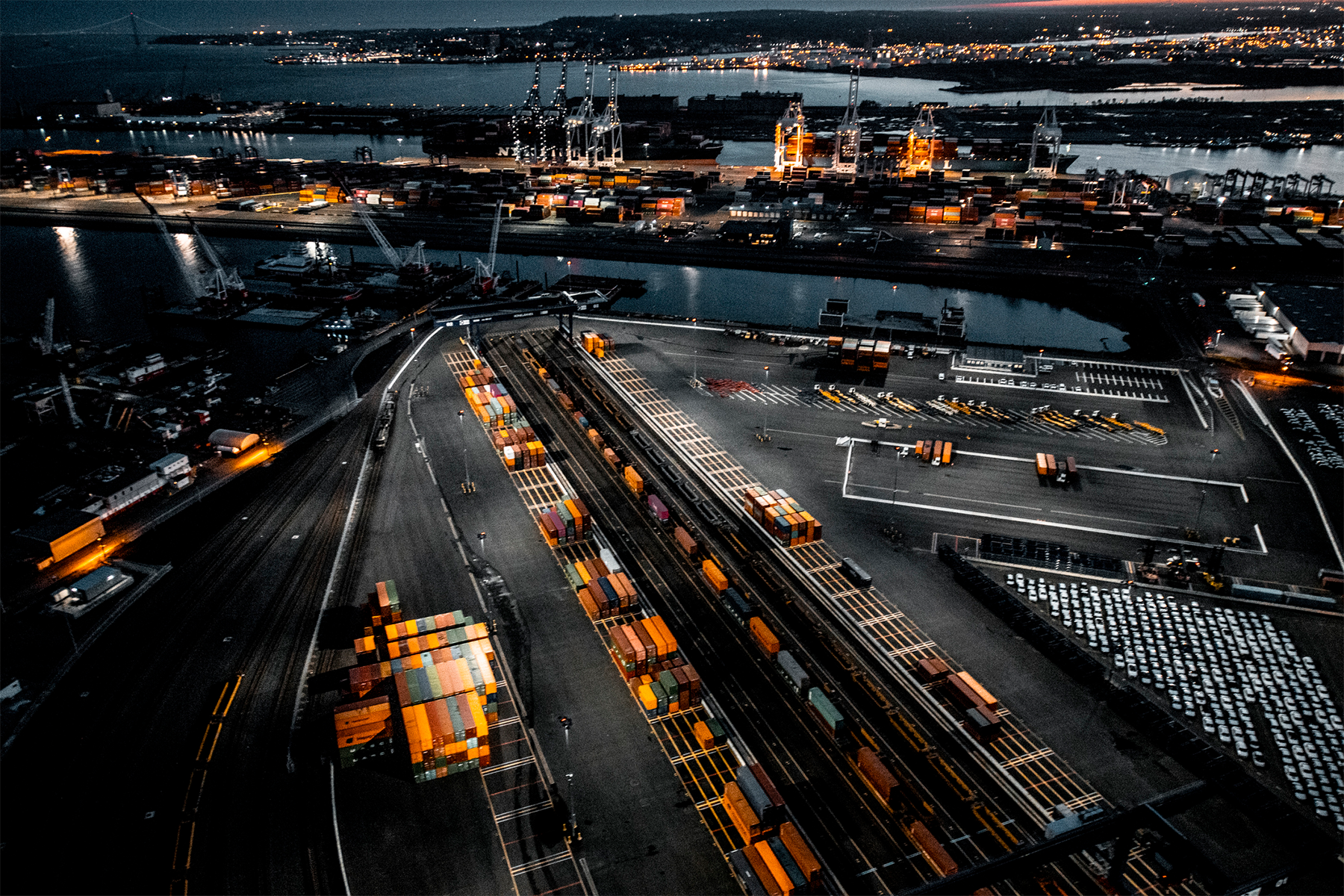
The Port of New York and New Jersey is the main gateway for marine cargo on the East Coast, handling the equivalent of 8 million containers annually. Diesel fumes from idling ships at the port contribute to poor health outcomes such as high rates of asthma and heart disease in Newark, Elizabeth and Bayonne. Families shouldn’t pay with their health. Shore power can cut pollution, save lives and create high-road jobs. It’s time to clean up our ports.
The good news? We have a proven solution that has been used around the world: shore power, also known as cold ironing.
Impacts of fossil-fueled ships at the Port of New York and New Jersey
Largest source of port pollution
At the Port of New York and New Jersey, ships produce 36% of fine particulate matter (PM2.5) and 53% of nitrogen oxides (NOx). Both pollutants are linked to serious health problems, and most emissions occur while ships sit at berth—closest to nearby communities and dock workers.
Childhood asthma crisis
In neighborhoods with heavy traffic and port activity, like Newark’s South Ward, up to 30% of children have asthma — and across the New York metro area, transportation-related pollution drives more than 21,000 childhood asthma cases annually.
— Newark parent
Benefits of shore power
Health and environmental justice
Shore power protects frontline families by reducing harmful diesel emissions that drive preventable asthma and pollution-related illnesses. A study found that shore power could cut PM2.5 pollution from ships by 69% and avoid at least 16 premature deaths per year. In Newark, where nearly 30% of children suffer from asthma linked to air pollution, this is a matter of public health and environmental justice.
Jobs and economy
Building out shore power creates high-road jobs in construction, electrical trades and facility maintenance. For instance, installation of a shore power system at the Brooklyn Cruise Terminal sustained dozens of manufacturing and local installation jobs and resulted in $22 million in economic activity. Investments in shore power strengthen local economies while modernizing port infrastructure.
Climate and competitiveness
Shore power cuts CO₂ emissions, aligns the Port of New York and New Jersey with emerging global clean shipping rules, and ensures our ports remain competitive in a rapidly decarbonizing industry.
What we’re doing about it
We’re fighting for a future where our ports power progress, not pollution. Our campaign brings together frontline communities, environmental justice leaders, labor allies and climate advocates to accelerate shore power adoption at the Port of New York and New Jersey. We call on the Port to:
- Fully build out shore power infrastructure to enable ships to plug in; and
- Implement a mandate requiring ships to plug in while at berth and stop running on dirty diesel
Resources

FACT SHEET
PRESS RELEASE
Join the movement
Your support is essential in reducing harmful emissions and protecting communities near the Port of New York and New Jersey. Together, we can drive policies that cut pollution, improve public health and create sustainable jobs — ensuring a safer and cleaner future for the area. Stay connected by signing up for our newsletter and join us in shaping a healthier environment for generations to come.